Analyzing Florida’s Medical Waste Volume, Hot Spots, and Compliance Challenges
Introduction
Florida is home to one of the most robust and fast-growing healthcare infrastructures in the United States. However, the sheer volume of medical care required by residents and tourists creates a massive, less-visible byproduct: regulated biomedical waste.
According to the Florida Department of Health (DOH), improper management of biohazardous waste, sharps, and pharmaceutical streams puts healthcare workers, environmental service staff, waste haulers, and the general public at immediate risk of infectious diseases and environmental contamination.
Managing this waste safely requires navigating a complex web of strict state regulations, punishing seasonal climates, and massive geographic volume variations.
The Scale of the Problem: Florida by the Numbers
To understand the scope of biomedical waste management in the Sunshine State, we look directly at the regulatory infrastructure monitored by state agencies:
- 50,000 Regulated Facilities: There are approximately 50,000 facilities across Florida that actively generate biomedical waste. This includes major hospitals, outpatient clinics, laboratories, nursing homes, dental offices, veterinarians, pharmacies, and even tattoo or piercing shops.
- The 25-Pound Threshold Rule: Under Florida law, any facility generating 25 pounds or more of biomedical waste in any 30-day period of the year must possess an active DOH Generator Permit and undergo annual inspections.
- The Exemption Structure: Out of the 50,000 facilities, roughly 13,000 generate less than 25 pounds per month. While they are exempt from the annual permit fee, they are still strictly regulated and inspected once every three years to prevent illegal dumping or regular trash contamination.
Regional Hot Spots: Where Waste Quantities Peak
Medical waste generation correlates directly with population density, specialized healthcare hubs, and the concentration of elderly care facilities. In Florida, the crisis points and high-volume hot spots are divided into three major zones:
1. South Florida (Miami-Dade, Broward, and Palm Beach Counties)
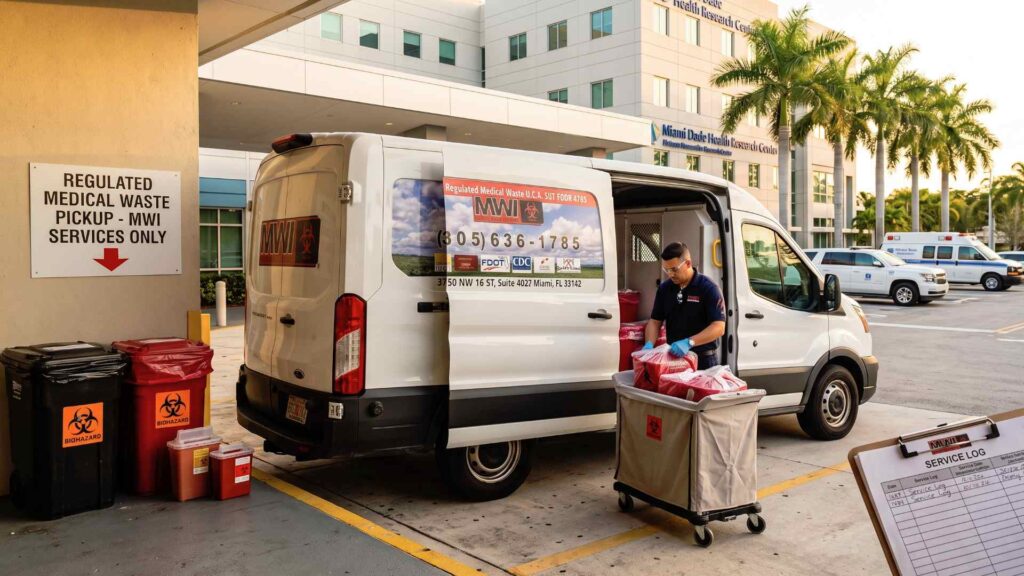
As the most densely populated region in the state, South Florida represents the largest concentration of medical waste generators. The combination of massive hospital networks, international clinical research labs, and dense urban clinics makes Miami-Dade and Broward counties the absolute highest volume hot spots for “cradle-to-grave” biohazard disposal tracking.
2. The Central Florida I-4 Corridor (Orlando to Tampa Bay)
Driven by massive population growth and a surge in urgent care clinics, outpatient surgery centers, and specialty practices catering to both permanent residents and millions of annual tourists, this region faces sharp fluctuations in waste generation.
3. Southwest and Central Florida Retirement Hubs
Areas like Fort Myers, Sarasota, and Ocala host disproportionately high numbers of long-term care facilities, assisted living facilities (ALFs), and nursing homes. These facilities generate massive, consistent streams of sharps, pharmaceutical waste, and pathological materials linked to chronic senior care.
Critical Environmental and Climate Challenges in Florida
Beyond population metrics, Florida’s environment introduces severe operational variables that do not affect northern states to the same degree.
☀️ The Subtropical Heat Threat
Florida’s relentless summer heat and high humidity act as a catalyst for biological hazards. High temperatures accelerate the decomposition of organic matter in red bags and pathological waste, causing rapid bacterial growth and intense odor issues.
Storage rooms or outdoor containment areas that are perfectly manageable in March can become major biological and compliance risks by July if pickup schedules are not dynamically adjusted.
🧪 The Risk to Water Tables and Ecosystems
Florida’s unique geology features an incredibly high water table and sensitive aquatic ecosystems (like the Everglades). If medical waste, heavy metals (such as older mercury-containing devices), or pharmaceutical chemicals enter landfills or are dumped illegally, hazardous runoff can swiftly infiltrate surface water and groundwater systems, leading to severe ecological damage.
Compliance and Corporate Responsibility
In Florida, the regulatory responsibilities are clearly divided:
- The Florida Department of Health (DOH) handles the generation, transportation, storage, and alternative treatment of biomedical waste.
- The Florida Department of Environmental Protection (DEP) holds primary responsibility for final disposal and biomedical waste incineration.
For local healthcare facilities, relying on a rigid, one-size-fits-all corporate waste contract often leads to critical compliance gaps—such as overfilled sharps containers or waste sitting too long in seasonal heat.
Transitioning to a highly responsive, transparent waste disposal strategy with flexible scheduling, reliable transport logs, and flat-rate, no-hidden-fee pricing is no longer just a financial advantage; it is a necessity for keeping Florida’s communities safe, clean, and compliant. Please contact us for more information.