Navigating Compliance: A Guide to Biomedical Waste Regulations in Florida
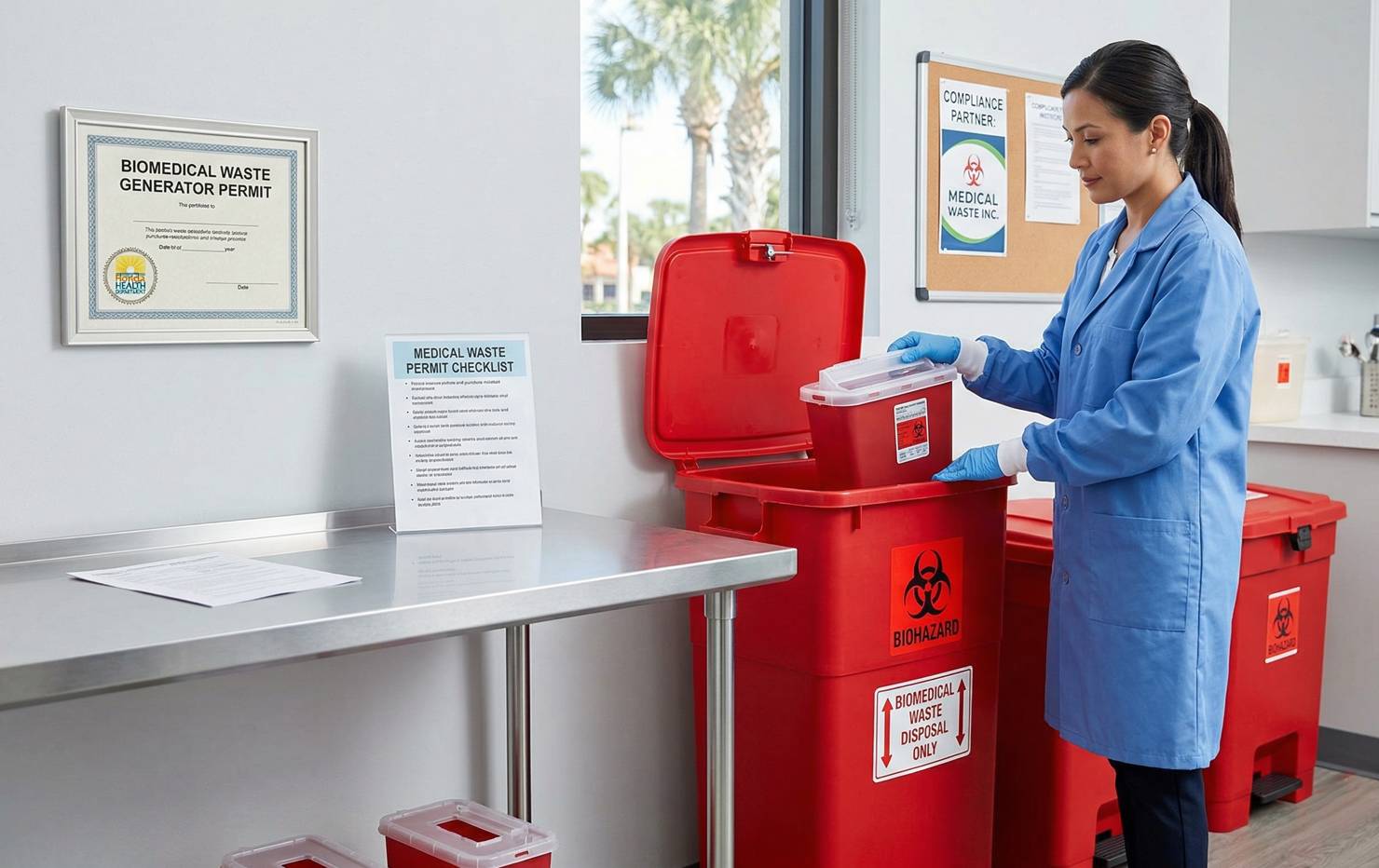
For healthcare facilities, dental offices, and tattoo parlors across the Sunshine State, managing waste isn’t just about cleanliness—it’s about strict legal compliance. Navigating the requirements set forth by the Florida Health Department can be daunting, but understanding the paperwork and procedures is essential to protecting your business and the community.
In this article, we break down the essential Biomedical Waste Generator Permit requirements and disposal practices every Florida facility needs to know to stay audit-ready.
Understanding the Biomedical Waste Generator Permit
If your facility produces any amount of sharps, blood-soaked materials, or infectious waste, you are likely classified as a generator. Under Florida Administrative Code, most facilities are required to obtain and maintain a Biomedical Waste Generator Permit.
This annual registration is issued by the Florida Health Department and must be renewed every year. It ensures that your facility is held to the state’s rigorous standards for the handling and storage of biohazardous materials. Failing to maintain an active license can lead to significant fines and legal complications during state inspections.
Do You Need a Medical Waste Permit?
While the terms are often used interchangeably, it is important to ensure your specific facility has the correct Medical Waste permit documentation on file. This includes not only your registration but also a written operating plan that outlines how your staff handles materials from the moment of creation to the moment of pickup.
Whether you are a small clinic or a large surgical center, having the correct certification status is the first line of defense in a regulatory audit.
Best Practices for Biomedical Waste Disposal
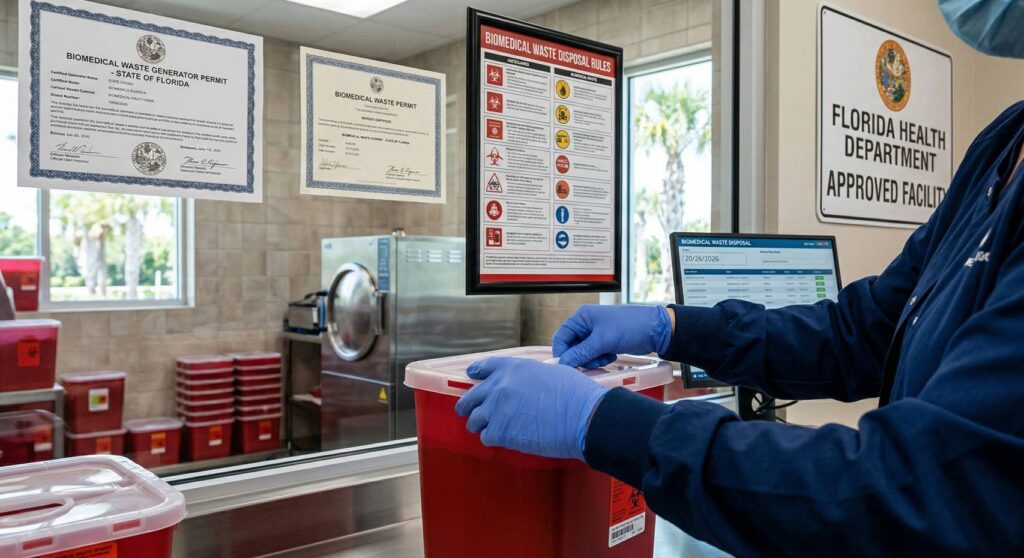
Securing your paperwork is only half the battle; the physical act of Biomedical Waste Disposal must be handled by a licensed professional. Florida law requires that biohazardous waste be treated (usually via autoclave or incineration) before it can be moved to a sanitary landfill.
To ensure your facility remains compliant:
- Segregate at the Source: Never mix infectious materials with regular trash.
- Use Approved Containers: Ensure all sharps are in puncture-resistant containers and red bags are properly labeled.
- Partner with Experts: Reliable Biomedical Waste Disposal services like Medical Waste Inc. provide the manifesting and tracking documents required by state regulators to prove your waste was handled legally.
Why Compliance Matters
The Florida Health Department conducts regular inspections to ensure that public health is not compromised by improper management practices. By staying up to date on your Biomedical Waste Generator Permit and following strict removal protocols, you protect your staff, your patients, and your professional reputation.
How Medical Waste Inc. Can Help
At Medical Waste Inc., we specialize in keeping Florida businesses compliant. From helping you understand the nuances of your Medical Waste permit to providing scheduled, reliable biohazardous waste removal, we handle the logistics so you can focus on patient care.
3 Steps to Total Regulatory Compliance
Navigating Florida’s medical waste landscape doesn’t have to be complicated. Follow these three steps to ensure your facility is fully protected:
- Register with the Florida Health Department Before you begin operations, you must apply for your Biomedical Waste Generator Permit. If you produce more than 25 lbs of waste in any 30-day period, you are required to register. Ensure your application is accurate to avoid processing delays.
- Develop Your Written Operating Plan To satisfy Medical Waste permit requirements, every facility must have a physical or digital document outlining their specific waste procedures. This plan should cover staff training, spill cleanup protocols, and the types of containers used for segregation.
- Schedule Professional Biomedical Waste Disposal Partner with a licensed transporter like Medical Waste Inc. to set up a pickup schedule that fits your volume. We provide the legally required tracking manifests that prove to the Florida Health Department that your waste was treated and disposed of in accordance with the law.
Address: 9401 NW 106th St, Miami, FL 33178
Phone: (305) 636-1785